




Egypt was the world’s third largest arms importer in 2015-19, SIPRI



-9202620935848.jpg)
-9202620935849.jpg)

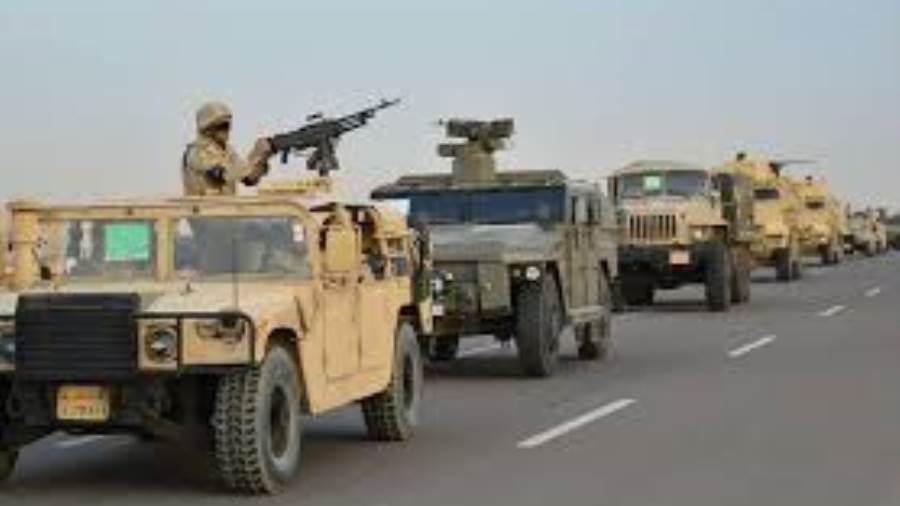
Egypt was the third-largest arms importer in the world in 2015–19. Its arms imports accounted for 5.8 per cent of the global total and were 212 per cent higher than in 2010–14, according to researching independent international institute SIPRI.
Established in 1966, SIPRI is dedicated into conflict, armaments, arms control and disarmament, and provides data, analysis and recommendations, based on open sources, to policymakers, researchers, media and the interested public.
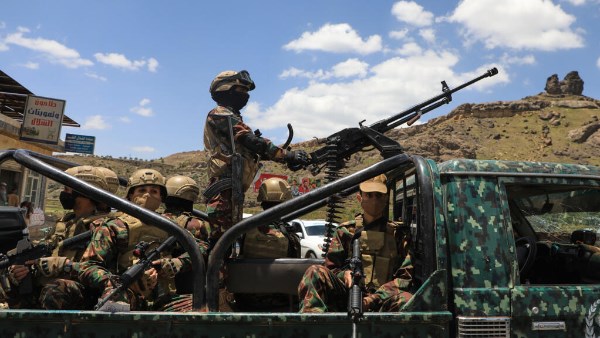
The upward trend in Egypt’s arms imports coincides with its military involvement in Libya and in Yemen, and fighting with rebel groups in the Sinai Peninsula.
It might also be linked to Egypt’s concerns over the security of gas fields in the Mediterranean and water supply from the Nile Basin.
The USA, which has been giving military aid to Egypt since 1978, was the largest arms exporter to Egypt for any five-year period between 1980 and 2014.
Although US arms exports to Egypt remained stable in 2015–19, the USA was only the third-largest arms supplier to Egypt in the period and accounted for 15 per cent of its arms imports, down from 47 per cent in 2010–14.
Because of frictions with the USA following 30 June Revolution in 2013, Egypt has intensified its efforts to procure arms from other suppliers.
In 2015–19 a total of 35 per cent of Egyptian arms imports came from France, up from 2.3 per cent in 2010–14; Russia accounted for 34 per cent of Egyptian arms imports in 2015–19.
Arms imports by states in the Middle East were 61 per cent higher in 2015–19 than in 2010–14. Five of the world’s top 10 arms-importing countries in 2015–19 were in the Middle East: Saudi Arabia, which received 35 per cent of arms transfers to the region, Egypt (16 per cent), the UAE (9.7 per cent), Iraq (9.7 per cent) and Qatar (9.6 per cent).
The USA supplied 53 per cent of total arms transfers to the region, France 12 per cent and Russia 11 per cent. Qatari arms imports were 631 per cent higher than in 2010–14, and it entered the top 10 for the first time.
SIPRI has identified 160 states as importers of major arms in 2015–19. The top five arms importers—Saudi Arabia, India, Egypt, Australia and China— accounted for 36 per cent of total arms imports in 2015–19.
Of these, Saudi Arabia, India and China were among the top five importers in both 2010–14 and 2015–19. At the regional level, Asia and Oceania accounted for 41 per cent of arms imports in 2015–19, followed by the Middle East (35 per cent), Europe (11 per cent), Africa (7.2 per cent) and the Americas (5.7 per cent).
Arms exporters
SIPRI has identified 68 states as exporters of major arms in 2015–19. The five largest suppliers of arms during that period—the USA, Russia, France, Germany and China—accounted for 76 per cent of all arms exports.
The top five in 2015–19 were the same as in 2010–14, but their combined total exports of major arms were 9.5 per cent higher. France had the highest increase in arms exports among the top five. US, German and Chinese arms exports also rose, while Russian arms exports fell. The top 25 arms exporters accounted for 99 per cent of the world’s major arms exports in 2015–19. States in North America and Europe accounted for 87 per cent of all arms exports.
-920252122624392.jpg "TOREC")