



The Islamic Republic emerged from a 1979 revolution
Fraying loyalist base will challenge Iran's new leader - and Islamic Republic's survival


-9202620935848.jpg)
-9202620935849.jpg)

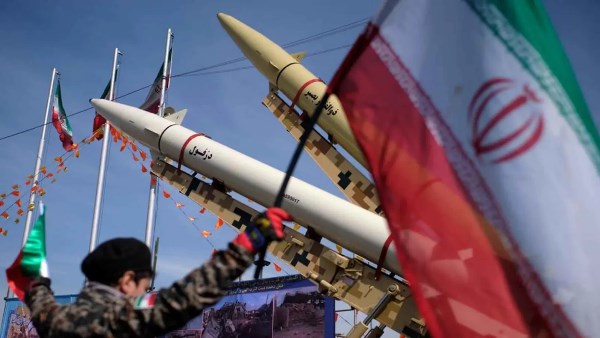
Iran's new supreme leader faces a massive external assault and growing internal anger at a time when the backing of the diehard ideologues who supported his predecessors is less clear than before.
Ayatollah Mojtaba Khamenei, who has deep influence inside Iran's Revolutionary Guard Corps and their vast business networks, survived the U.S. and Israeli airstrikes on Iran in which his father Ayatollah Ali Khamenei was killed more than a week ago.
State TV aired footage of supporters of the Islamic Republic celebrating in the streets after he was selected by a hardline clerical council late on Sunday.
Yet Reuters interviews with three members of the Guards' volunteer militia, the Basij, as well as ordinary Iranians, officials, insiders and political analysts, point to a much narrower support base than the Islamic Republic once enjoyed.
"The strategy in choosing a hardliner as the new leader would be to consolidate the base, but they're ending up with an increasingly small circle of supporters," said Ali Ansari, a modern history professor at the University of St Andrews in the UK.
"And the longer this goes on, the more it will all fray at the edges," he said.
The Islamic Republic emerged from a 1979 revolution backed by millions of Iranians. But decades of rule marked by corruption, repression and mismanagement have thinned that support, alienating many ordinary people.
Still, a core of loyalists remains — people who repeatedly show up at the ballot box to back the Islamic system and who turn out on the streets to crush opposition protests.
"I am so happy that he (Mojtaba Khamenei) is our new leader. It was a slap in the face to our enemies who thought the system will collapse with the killing of his father. Our late leader's path will continue," said university student Zahra Mirbagheri, 21, from Tehran.
Highly organised and able to mobilise quickly, the loyalists still pose a major obstacle to any U.S. or Israeli hopes of effecting regime change.
-920252122624392.jpg "TOREC")