



Helium is a little-known but key input in many industries
The Iran war is threatening supply of a little-thought-of resource — helium. What it means for markets


-9202620935848.jpg)
-9202620935849.jpg)

The war in the Middle East could pose a threat to the semiconductor industry and other sectors dependent on a resource produced in the Gulf — helium.
Helium is a little-known but key input in many industries, most notably technology. In semiconductor manufacturing, its cooling properties are used to transfer heat. Helium is also indispensable in photolithography, a technique used to print each chip’s intricate circuitry.
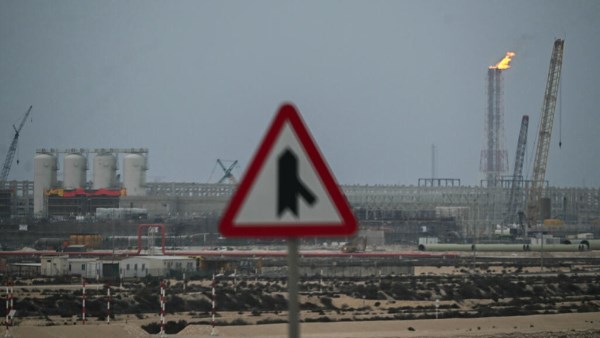
The U.S. Geological Survey estimates that before the war Qatar produced more than one-third of the world’s helium supply. Lately, however, operations at QatarEnergy’s Ras Laffan Industrial City — the world’s largest liquefied natural gas export facility, which produces helium as a byproduct — were halted after it was struck by an Iranian drone early in the war. On Wednesday, Iranian missiles crippled the plant.
A global helium shortage would ripple across a range of industries.
“Qatar makes some 30% of the world’s helium — a key input for semiconductors, industrial manufacturing, and medical imaging — while several key ingredients for fertilizer production also move through the Strait,” according to a report early this week by the chief investment office of UBS Global Wealth Management. “Any lengthy disruption will not only impact energy prices, but also food prices and industrial production.”
Known choke point
Helium supply has always been a risk. In 2023, the Semiconductor Industry Association cautioned that “there would likely be shocks to the global semiconductor manufacturing industry” should the supply of helium be disrupted.
Today, a lengthy “prolonged regional conflict could potentially disrupt chipmakers’ manufacturing operations regarding sourcing materials like helium and bromine,” Ray Wang, computer memory analyst at SemiAnalysis, told CNBC. “For now, the impact appears to be limited. However, a prolonged conflict could eventually lead to disruptions or require adjustments in the sourcing of key materials.”
South Korea and Taiwan, the world’s two largest semiconductor makers, are particularly vulnerable to Middle East helium supply.
In 2025, South Korean manufacturers bought 55% of their helium from countries in the Gulf Cooperation Council, a union of six Arab nations. Taiwan bought 69% of its helium from the GCC in 2024, according to a report out Wednesday from analysts at Barclays.
The Strait of Hormuz’s effective closure has spiked helium prices by limiting supply. Bank of America estimated in a note last week that spot helium prices have surged as much as 40%, depending on the market. On Monday, Phil Kornbluth, president of Kornbluth Helium Consulting, told CNBC that prices were up by 70% to 100%, in some cases within a little more than a week.
-920252122624392.jpg "TOREC")