




The coming rounds of talks can come sometime later this week
More U.S.-Iran peace deal talks are in discussion, White House says



-9202620935848.jpg)
-9202620935849.jpg)

A second round of negotiations between the U.S. and Iran is currently under discussion, though nothing has been officially scheduled yet, a White House official told CNBC on Tuesday.
The confirmation that the Trump administration is mulling further talks with Tehran followed reporting that the peace negotiations, which stalled out days earlier, could restart before a fragile two-week ceasefire is set to expire.
Officials from both countries could return to Pakistan to resume those talks, Reuters reported earlier Tuesday morning, citing Pakistani and Iranian officials.
“The coming rounds of talks can come sometime later this week or earlier next week. But nothing is finalised as of now,” an official at the Iranian embassy in Islamabad told Reuters.
CNN and NBC News also reported that in-person negotiations could resume soon. The Iranian embassy in Islamabad did not immediately respond to CNBC’s request for comment on the reporting.
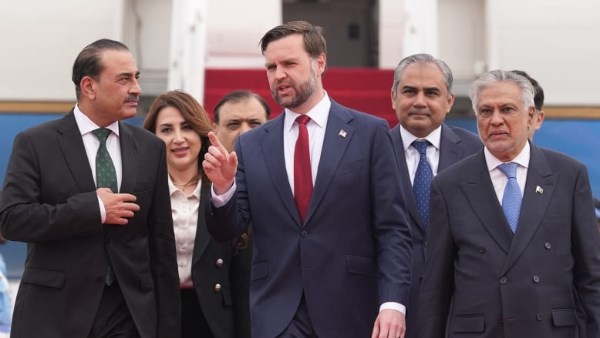
Talks between U.S. and Iranian negotiators in Islamabad last weekend ended without a deal in hand, as key sticking points on Tehran’s nuclear ambitions remained unresolved and each side accused the other of shifting the goalposts.
Vice President JD Vance, who led the U.S. delegation alongside Special Envoys Steve Witkoff and Jared Kushner, said Monday that the next diplomatic move is Iran’s to make.
“Whether we have further conversations, whether we ultimately get to a deal, I really think the ball is in the Iranian court, because we put a lot on the table,” Vance told Fox News.
Top Iranian officials suggested after the failed talks in Islamabad that the U.S. acted in bad faith. Iranian Foreign Minister Abbas Araghchi said in an X post that Tehran’s team was met with “maximalism, shifting goalposts, and blockade,” while Iran’s parliamentary speaker Mohammad Bagher Ghalibaf said the U.S. failed to gain Iran’s trust.
President Donald Trump responded to the scrapped talks by announcing a blockade in the Strait of Hormuz, the vital trade route that normally carries 20% of the world’s oil.
U.S. Central Command later specified that the blockade will apply to vessels “entering or departing Iranian ports and coastal areas, including all Iranian ports on the Arabian Gulf and Gulf of Oman.”
The move comes as traffic through the strait remains at a trickle, despite Trump proclaiming April 7 that a two-week ceasefire agreement with Iran was subject to the route being fully reopened.
-920252122624392.jpg "TOREC")