




History shows defense spending booms typically weaken fiscal and external balances
IMF flags tough trade-offs as governments ramp up defense spending



-9202620935848.jpg)
-9202620935849.jpg)

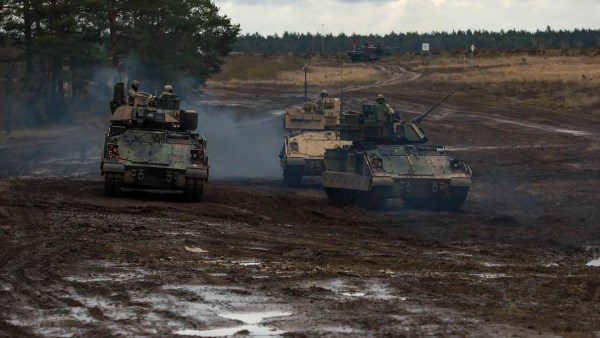
A new era of higher defense spending has prompted the International Monetary Fund to warn of an emerging “guns versus butter” trade-off, with governments expected to face tough choices on debt and public spending.
The so-called “guns versus butter” dilemma refers to the trade-off governments face when allocating resources between defense spending and social programs.
In its latest World Economic Outlook, the IMF said approximately half of the world’s countries have raised their military budgets, noting that arms sales by the biggest global defense firms have doubled in real terms over the last two decades.
These trends appear set to persist as geopolitical tensions intensify, the IMF said, raising serious questions about whether higher defense spending could crowd out other outlays such as social spending.
Citing analysis of 164 countries’ experience since the end of World War II, the IMF warned that history shows defense spending booms typically weaken fiscal and external balances, and tend to be followed by sharp increases in public debt and large reductions in social spending.
French Finance Minister Roland Lescure acknowledged that the defense versus social spending trade-off poses a backlash risk to the government ahead of the country’s 2027 presidential election.
He stressed, however, that higher defense spending can create a “double dividend” by shoring up sovereignty and creating more domestic jobs.
“We have to rethink war. Obviously, drones and new forms of combat have erupted — and we need to address them,” Lescure told CNBC’s Karen Tso on Wednesday on the sidelines of the IMF and World Bank Group Spring Meetings in Washington this week.
“I don’t think we’re missing any social spending in France; I think we have the highest level of spending. And this is good. This is our model,” Lescure said.
“If defense spending is also an industrial strategy that creates jobs, including in areas where people have felt disenfranchised from globalization, they felt left aside from the big movement towards digital innovation, where we’re going to have a double dividend of defense spending, which is more sovereignty, but also more jobs,” he continued.
“If we don’t do that … we’re going to have a backlash. We don’t want that.”
‘Faith in the system’
Ajay Banga, president of the World Bank, said defense spending has clearly become a priority for many countries, while funding for overseas development has shrunk across the developed world.
“On the other hand, even in that period last year, we raised a record amount for IDA21, which is the part of the bank that goes to the poorest countries,” Banga told CNBC on Wednesday.
The International Development Association’s (IDA) 21st funding round secured an additional $24 billion in late 2024, which resulted in $100 billion in financing after leveraging. These funds are used to support 78 of the world’s lowest-income countries to enable investment in sectors such as health and education, as well as climate resilience.
-920252122624392.jpg "TOREC")