






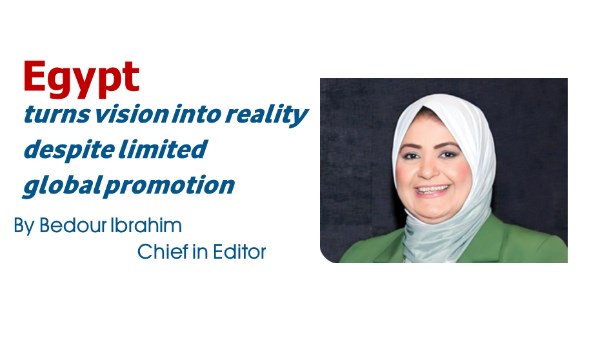
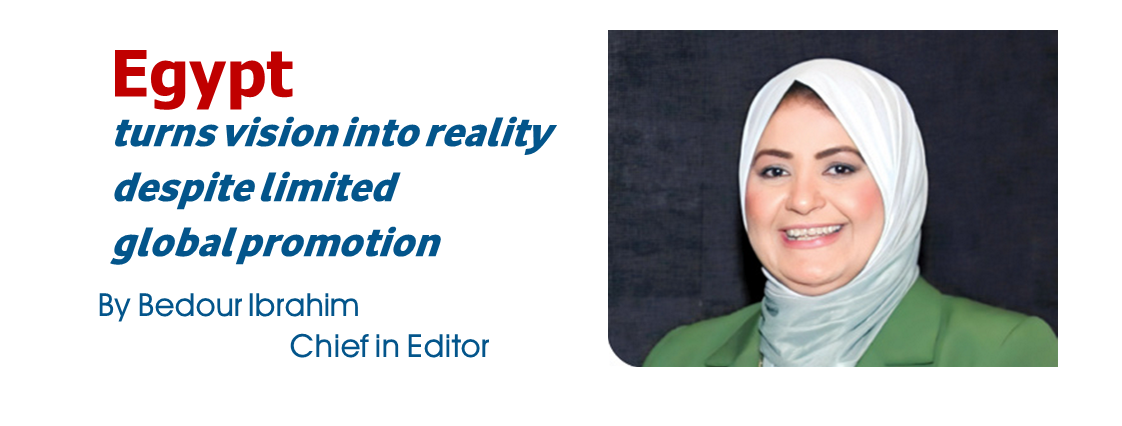
Egypt turns vision into reality despite limited global promotion By Bedour Ibrahim The editor-in-chief


-9202620935848.jpg)
-9202620935849.jpg)

Egypt has demonstrated that vision, when backed by political will, strategic planning, and determined execution, can be transformed into reality.
Over the past decade, plans and ambitions once viewed as distant or even unattainable have materialised into tangible achievements on the ground.
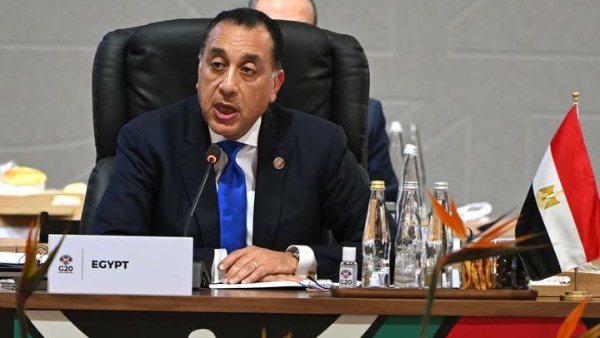
In 2008, I attended a major conference led by Dr Mostafa Madbouly, who was then Chairman of the General Organisation for Physical Planning (GOPP). During the event, he presented Egypt Vision 2050 — a comprehensive roadmap for reshaping the country’s urban future.
I still vividly recall the ambitious proposals he outlined: the redevelopment of the Maspero Triangle, the creation of a new administrative hub for ministries and government institutions, the restoration of Cairo’s urban and historic fabric, the establishment of new cities to absorb growing population pressures, and the development of a world-class city on the North Coast.
At the time, most attendees, including senior consultants, business leaders from the real estate, tourism, and industrial sectors, and media professionals, viewed the presentation as highly ambitious and difficult to realise. Some participants responded with outright scepticism, while others openly questioned whether such a vision could ever move beyond the conceptual stage.
What began as a vision on paper, much like many ambitious master plans before it, remained unrealised until the emergence of strong political leadership under President Abdel Fattah El-Sisi, which brought renewed commitment and execution-driven momentum to Egypt’s development agenda.
The President’s advisers subsequently refined and expanded many of the proposals outlined in Egypt Vision 2050, adding significant new dimensions.
This laid the foundation for implementing major national projects that have driven an unprecedented transformation, including extensive road and transport networks, smart and sustainable mobility systems, and a new generation of urban developments that have fundamentally reshaped traditional planning concepts.
For the first time, Egypt has moved beyond developing cities that function primarily as residential communities, instead creating integrated urban centres and business districts that combine housing, employment, industry, tourism, entertainment, education, and healthcare within a single ecosystem.
We need only look back a few years to recall how the idea of building the New capital was initially received, and the level of scepticism that surrounded the project.
Today, however, the transformation is clear. The New capital has become a tangible reality, the Maspero Triangle has been completely reshaped, and Historic Cairo has undergone significant revitalization.
I also remember my first visit to New Alamein City in 2018 during the foundation stone-laying ceremony, when Dr Mostafa Madbouly spoke about the construction of world-class towers.
What many regarded at the time as an ambitious vision became a tangible reality within just a few years.
Alongside this urban transformation, the Egyptian government has taken significant steps to support industry, agriculture, and other productive sectors, and has implemented major economic measures and structural reforms.
Egypt has already delivered tangible positive outcomes, as reflected in improvements in numerous economic indicators despite global turbulence.
These indicators continue to move in Egypt’s favour, as demonstrated by the country’s resilience in absorbing the repercussions of the conflict involving Iran.
At the onset of the crisis, Egypt came under significant pressure after gas supplies were disrupted, and between $10 billion and $12 billion in foreign investment in local debt instruments exited the market within a single month.
However, the adoption of more flexible economic policies helped stabilise conditions. At the same time, remittances from Egyptians working abroad surged to a record $5.5 billion in March, up 62% -on-year.
Marketing: The Missing Link
What Egypt has achieved in development and urban transformation over the past 11 years would have taken decades to accomplish in many other countries.
Yet a critical gap remains: the need for more effective global marketing of these achievements, investment opportunities, and the scale of progress made. The longstanding perception of Egypt as a country with inadequate infrastructure, limited services, and insufficient technological advancement remains deeply embedded in the minds of many foreign investors.
I have witnessed this firsthand through my participation in numerous international events abroad.
Despite recent government efforts to highlight Egypt’s urban development journey and economic progress across various official and international platforms, a large segment of overseas investors still lacks a clear understanding of the scale of the transformation underway in the country.
During a session featuring Housing Minister Randa El-Menshawy at the Egypt Future Conference in London, a foreign businessman criticised Egypt’s infrastructure, road network, and what he perceived as a lack of an attractive investment environment for international investors.
His remarks reflected a limited understanding of the scale of progress and transformation Egypt has undergone in recent years.
In response, the Minister, with professionalism, composure, and confidence, outlined in detail the scale of Egypt’s development achievements and the economic reforms and policy measures implemented by the government to create a more attractive investment climate.
The confidence with which she spoke reflected both the backing of the political leadership and the scale of the transformation achieved on the ground, progress that ultimately speaks for itself.
At the conclusion of the session, the businessman apologized to the Minister, acknowledging that he had been unaware of the scale of these developments and achievements.
The New Capital Experience
Looking at the experience of the Administrative Capital for Urban Development (ACUD), significant progress has been achieved since Eng. Khaled Abbas assumed leadership of the company in 2022, particularly in delivering infrastructure, utilities, and service projects that facilitated the gradual relocation of government employees and ministries to the New capital.
Today, all state institutions operate from the new capital, turning into reality the long-standing vision of relocating government ministries from central Cairo. This concept was first proposed in the 1970 s.
Following the relocation of government institutions and the implementation of a carefully structured project delivery timetable, ACUD placed greater emphasis on promoting the New capital both locally and internationally.
The company launched a series of successful marketing campaigns, the latest being the Ramadan campaign, “The Sweetness of New Beginnings,” which showcased real-life scenes from the New capital, including its landmark towers, the monorail system, and key government and administrative institutions.
ACUD has also played an important role in organizing and hosting major events, most recently the Fan Zone, which offers spectators an exceptional viewing experience for the 2026 FIFA World Cup matches. These events have received broad media coverage, helping project a continuous and authentic image of the New capital.
The New capital’s experience extends beyond promotion alone to encompass the management of the entire marketing process. Although ACUD works with specialized professional firms, the company’s leadership closely oversees every stage of its marketing strategy to ensure that targeted objectives are met and desired outcomes are achieved.
Egypt possesses all the essential fundamentals. If a professional marketing approach is combined with rigorous follow-up and effective execution, the country is well-positioned to emerge as a major destination for attracting global investment.
-920252122624392.jpg "TOREC")