




Trump’s reparations demand has introduced a new sticking point
Pakistan signals progress on U.S.-Iran deal as Washington and Tehran trade reparation demands



-9202620935848.jpg)
-9202620935849.jpg)

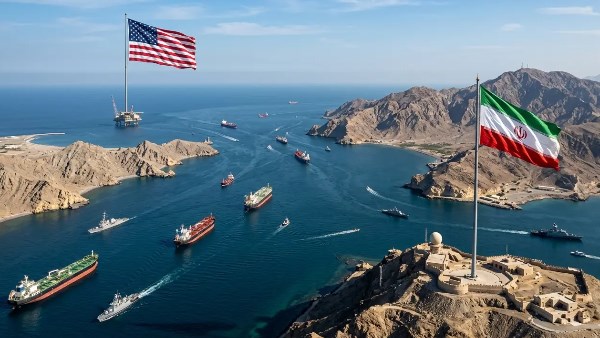
The U.S. and Iran are close to “some sort of arrangement” over the Strait of Hormuz, a senior Pakistani minister has said.
Pakistan’s defense minister, Khawaja Asif, told reporters on Tuesday that “things are shaping up again in favor of a peace arrangement or a deal,” per Bloomberg News.
“The signals in the last two to three days are that we are close to some sort of an arrangement,” he added, without providing further details.
It follows comments from a Qatari foreign ministry spokesperson, who told Al Jazeera that talks between Iran and Oman about opening a shipping channel through the Strait of Hormuz were at a “critical juncture.”
U.S. and Iran trade reparation demands
The developments came even as Washington and Tehran appeared to harden their negotiating stance.
President Donald Trump said Monday that Iran should pay reparations for what he labeled “the damage they’ve done” over the past half a century.
“They asked for reparations, you might say, or they asked for money for the damage that we’ve done, and I said that’s a good idea, well we’re going to ask for money for the damage they’ve done over a 50-year period,” Trump told reporters in the Oval Office.
He added that compensation could be applied to pay damages for U.S. personnel killed or wounded in the Middle East as well as to the families of protesters killed in a crackdown on mass unrest by the Iranian regime this year.
“If there’s damages to be paid, I think Iran should pay those damages,” he said.
Oil prices jumped sharply early on Tuesday, with global benchmark Brent crude oil futures adding 2.5% to trade near $90 per barrel, before paring gains in response to Pakistan’s Asif’s comments. Brent traded 0.3% higher at $87.99 per barrel at 8:27 a.m. ET.
Separately, the president said in a Truth Social post on Monday that he was “demanding compensation from Iran.”
“It is an interesting idea because now I am likewise demanding compensation from Iran,” he said, pointing to civilian and military deaths and casualties. “I have instructed my representatives to put this firmly into any, and all, future negotiations.”
U.S. and Iran trade reparation demands
Trump’s reparations demand has introduced a new sticking point after Iran laid out its own conditions for reopening the Strait of Hormuz on Saturday, a vital waterway that carried roughly a fifth of the world’s oil before the war.
Mohammad Bagher Zolghadr, secretary of Iran’s Supreme National Security Council, said Saturday the strait won’t reopen until Washington lifts its naval blockade and sanctions, withdraws American forces from the region, pays war reparations, and releases frozen Iranian assets. The council also called for an end to U.S. attacks on Iran’s regional allies.
Iran’s Foreign Ministry on Tuesday pushed back on the economic front. The spokesman, Esmail Baghaei, responded to the U.S. Treasury Secretary Scott Bessent’s claims that U.S. sanctions were “suffocating” Iran.
He said that Washington opts for sanctions whenever diplomacy fails and escalates them when they don’t work — a pattern he said has become less a “policy” than a “compulsive addiction.”
-920252122624392.jpg "TOREC")