




U.S. President Donald Trump has frequently criticized Europe for being too reliant on the U.S
U.S. and European interests are ‘intertwined,’ Secretary of State Rubio says
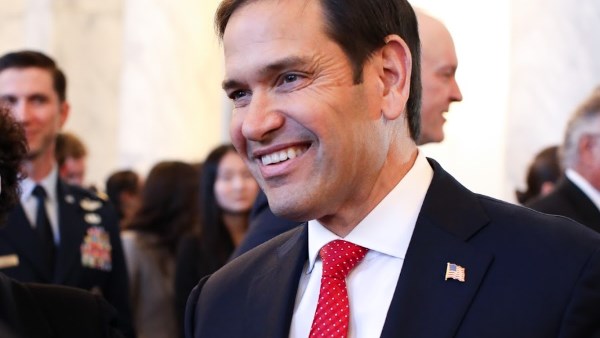




The U.S. has no intention of abandoning its deep alliance with Europe and wants the region to succeed, U.S. Secretary of State Marco Rubio said on Saturday.
“We care deeply about your future and ours,” Rubio told the Munich Security Conference (MSC).
“We want Europe to be strong,” he said. “We believe that Europe must survive, because the two great wars of the last century serve, for us, as history’s great reminder, that ultimately, our destiny is, and will always be, intertwined with yours.”
U.S. President Donald Trump has frequently criticized Europe for being too reliant on the U.S. for its security and has pushed NATO allies to boost defense spending. His pursuit of ownership of Greenland, a Danish territory, has also rattled European leaders in recent months.
“We do not need to abandon the system of international cooperation we authored, and we don’t need to dismantle the global institutions of the old order that together we built. But these must be reformed. These must be rebuilt,” Rubio said.
The U.S.’s top diplomat told the gathering of European leaders that American leadership has succeeded in resolving thorny issues such as the Israel-Gaza conflict and made progress in ending Russia’s war with Ukraine which multilateral organizations including the U.N. have so far failed to.
“The United Nations still has tremendous potential to be a tool for good in the world, but we cannot ignore that today, on the most pressing matters before us, it has no answers and has played virtually no role. It could not solve the war in Gaza,” Rubio said. “Instead, it was American leadership that freed captives from barbarians and brought about a fragile truce. It has not solved the war in Ukraine.”
Economic cooperation
Rubio said the U.S. sought a “reinvigorated alliance” with Europe, “one that does not maintain the polite pretense that our way of life is just one among many and that asks for permission before it acts.”
In a wide-ranging speech, Rubio criticized past policies that encouraged mass migration, outsourced supply chains and contributed to “deindustrialization,” which he said was “not inevitable.”
“It was a conscious policy choice, a decades-long economic undertaking that stripped our nations of their wealth, of their productive capacity, and of their independence. And the loss of our supply chain sovereignty was not a function of a prosperous and healthy system of global trade. It was foolish,” Rubio said.
Rubio also discussed how greater trans-Atlantic cooperation could reposition the West to lead in 21st-Century industries.
“Together, we can reindustrialize our economies and rebuild our capacity to defend our people,” he said.
“Commercial space travel and cutting-edge artificial intelligence, industrial automation and flex manufacturing, creating a Western supply chain for critical minerals not vulnerable to extortion from other powers, and a unified effort to compete for market share in the economies of the global South.”
-920252122624392.jpg "TOREC")