




FC's commitment sits within a broader World Bank Group engagement in Egypt
World Bank Group’s IFC Marks Fifty Years Partnership with Egypt, Helping Create Jobs and Boosting Private Sector Growth



-9202620935848.jpg)
-9202620935849.jpg)

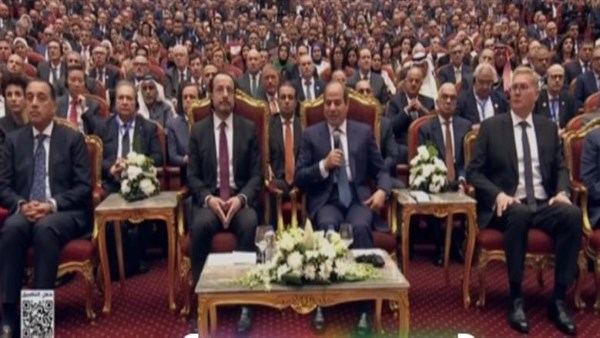
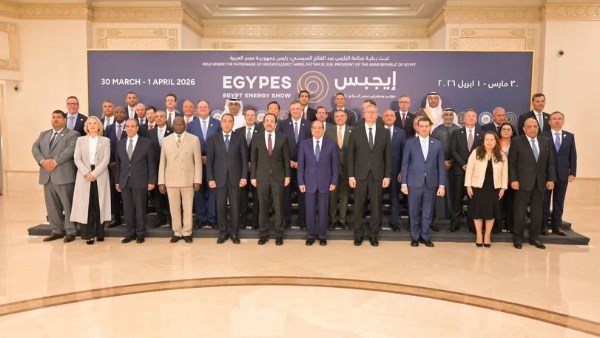
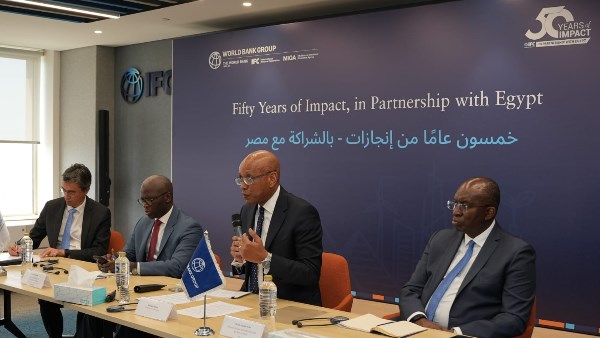
IFC today marks 50 years of partnership with Egypt's private sector, with more than $10 billion invested and mobilized across nearly 300 projects since 1976, spanning energy, agribusiness, manufacturing, healthcare, tourism, financial markets, and more. Across the years, each project was backed with one single focus: building private sector capacity to create jobs and drive inclusive growth.
IFC's commitment sits within a broader World Bank Group engagement in Egypt totaling more than $40 billion since 1959 – with the World Bank financing policy reform and projects, MIGA providing guarantees that give international investors the confidence to enter, and IFC mobilizing private capital directly in the companies and financial institutions that generate jobs. That shared strategy is concentrated in five sectors where the employment impact is greatest: energy and infrastructure, agribusiness, healthcare, tourism, and manufacturing.
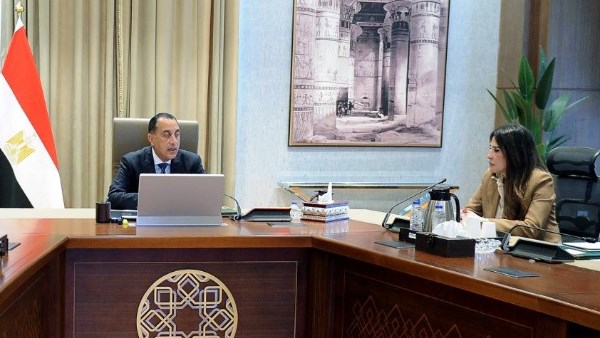
Through both investment and advisory services, IFC’s 50-year partnership with Egypt has delivered impact across every priority sector. For example, in energy, IFC invested and mobilized a consortium of institutions for Benban Solar Park - the world's largest solar installation at the time of its completion - and supported Egypt's first utility-scale battery storage system in 2025. In infrastructure, the Damietta Alliance Container Terminal is projected to generate 80,000 jobs by 2040. In agribusiness, Wadi Group grew from desert farmland into Africa's largest egg producer. Egypt's financial inclusion rate rose from 27 percent in 2016 to 76.3 percent by 2025, supported by IFC-backed institutions and the ZAAT program with Banque Misr, for example, which brought more than 80,000 women entrepreneurs into the formal banking system. In a reflection of the partnership's depth, IFC was appointed by Prime Minister Madbouly to advise on Egypt's Asset Monetization Program – the most senior advisory mandate IFC has held in the country's history – and is supporting private sector participation in 11 of Egypt’s airports.
The next half-century partnership begins its next chapter today. IFC today signed a $40 million loan agreement with Nile Sugar Company to finance 5,713 hectares of sugar beet cultivation in Minya, a city in Upper Egypt. Egypt produces only 80 percent of its domestic sugar demand - exposing the country to global commodity volatility. This project will help reduce Egypt's import bill while improving access to finance for smallholder farmers. It also carries a deliberate echo: IFC’s first agribusiness investment in Egypt was with Delta Sugar in 1978, helping establish local sugar production nearly fifty years ago.
“Egypt’s partnership with the World Bank Group stands among our most impactful and enduring development relationships, spanning more than six decades and supporting economic transformation. As we commemorate 50 years of IFC commitment to Egypt’s private sector, we do so with a clear vision for the future: greater investment, more jobs, and a stronger private sector driving inclusive and sustainable growth for all Egyptians,” said H.E. Dr. Badr Abdelatty, Minister of Foreign Affairs, International Cooperation, and Egyptians Expatriates, and Egypt’s Governor at the World Bank Group.
"Fifty years of partnership with Egypt has built industries, opened markets, and created opportunity for millions of Egyptians,” said Ethiopis Tafara, IFC’s Vice President for Africa. “Egypt has the entrepreneurs, the reform momentum, and the demographic energy to meet the ambitions of its people. The World Bank Group is here – as one institution, with its full toolkit – to ensure that the next 50 years deliver jobs at the scale Egypt needs."
IFC's journey in Egypt began with a $5.6 million investment alongside regional co-investors to help build the Arab Ceramic Company near Cairo – a commitment to Egypt's reconstruction and the start of a five-decade private sector partnership. As IFC enters its second half-century, that commitment is clear: to keep mobilizing private capital in the sectors that create jobs at scale for the 1.3 million young Egyptians entering the workforce every year, and for the generations that follow.
-920252122624392.jpg "TOREC")