




Ukraine’s military has increasingly opted for longer-range drone strikes
Russia just passed a law allowing its central bank to down drones



-9202620935848.jpg)
-9202620935849.jpg)

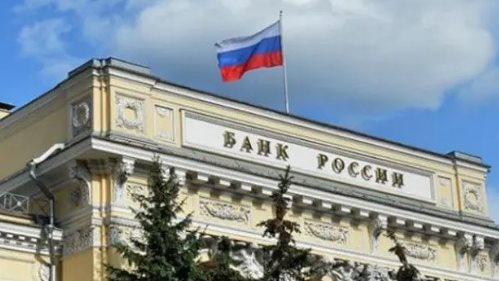
Russia has passed a law authorizing its central bank and other financial institutions to repel drone attacks with their own defense systems, as the country struggles to defend against Ukrainian strikes.
The law, passed by Russia’s lower house of parliament on Tuesday, will allow staff at Russia’s central bank to be armed and to operate the systems used to down unmanned aerial vehicle (UAV, or drone) attacks without the involvement of special forces.
Ukraine’s military has increasingly opted for longer-range drone strikes, thereby stretching Russia’s capacity to defend the skies over its vast territory.
Russia’s largest bank, Sberbank, the Russian Cash Collection Association — the country’s largest carrier of cash and valuables — and Special Postal Service, which handles the delivery of classified and top-secret state correspondence, are among the other institutions to be allowed to oversee their own drone defense operations, news agency RBC reported Tuesday.
Employees will be “empowered to prevent the operation of unmanned aerial vehicles, underwater and surface vessels and apparatus, unmanned vehicles, and other automated unmanned systems,” RBC reported, citing the law passed in the State Duma.
This right may be used to repel an attack on protected facilities, the report said, or to repel the threat of an attack on employees or other persons located at these sites.
Attacks could be thwarted by jamming or converting drone remote control signals, interfering with their control panels, and damaging or destroying the drones.
Russia and Ukraine both deny deliberately targeting civilian infrastructure as part of their ongoing war, which began in Feb. 2022. However, there have been multiple instances of attacks on critical infrastructure and facilities in both countries, which have also been subject to cyber warfare.
-920252122624392.jpg "TOREC")