




The announcement of the deal created “far more questions than answers
Controversial Venezuelan executive courts investors after Trump oil deal



-9202620935848.jpg)
-9202620935849.jpg)

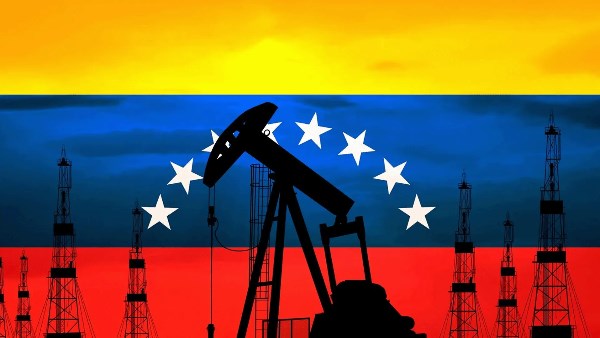
The controversial Venezuelan energy executive who is now the Trump administration’s business partner has begun talking to potential investors in the oilfields they will jointly control. As part of the unusual energy agreement between Washington and Caracas announced on Friday, Alejandro Betancourt, who owns the second-largest private oil business in Venezuela, is the administration’s minority partner in a company that will control more than 65bn barrels of the country’s reserves.
The new company will seek to award licences or establish joint ventures with US energy groups and other investors in some or all of the 17 different oilfields it has access to, according to people briefed on the agreement. Some of those oilfields have previously been held by Chinese and Russian companies. Betancourt is a highly polarising figure in Venezuela because of his close connections to the socialist government that has been in power since Hugo Chávez took office in 1999. He is the most prominent Bolichico, a term for the class of politically connected magnates who emerged under Chávez.
Betancourt, the White House and the US state department did not immediately respond to requests for comment. The agreement, which was announced on Friday evening by Donald Trump, is an attempt to generate confidence in Venezuela’s struggling oil sector, which collapsed over the past decade due to mismanagement and sanctions. Following the January military operation to seize and capture former president Nicolás Maduro, the US had hoped to spur an investment boom in the country’s oil sector. However, to the administration’s frustration, few major companies have been willing to invest in Venezuela because of what they see as the political and legal risks under the government now led by interim president Delcy Rodríguez. ExxonMobil and ConocoPhillips, which both had billions of dollars of assets expropriated in Venezuela over recent decades, have for the moment decided not to invest. Several companies with existing operations in the country — Chevron, Repsol and Eni — have made agreements with Venezuela’s government this year. In a televised address on Saturday night, Rodríguez said the deal included the development of eight greenfield blocks in Venezuela’s Orinoco Oil Belt, with minimum royalties of 16 per cent and income tax of 34 per cent. The interim president did not mention Betancourt or his company, North American Blue Energy Partners (NABEP).
As part of the agreement, the Pentagon’s Office of Strategic Capital will provide guarantees to the oil companies that take on the planned licences in order to cover some of the financial and political risks they face in Venezuela.
The OSC was set up under Joe Biden’s administration to boost investment in technologies deemed critical for national security and has the capacity to lend up to $200bn. One person briefed on the deal said the OSC provided a means of offering guarantees to potential investors without asking Congress for funding. Betancourt’s company NABEP produces about 200,000 barrels of oil a day. The private investors it is negotiating with on potential oilfield licences or joint ventures include Lionheart Holdings, according to people briefed on the talks. Lionheart Holdings is
sponsored by Lionheart Capital, a Miami-based investment firm founded by Ophir Sternberg. Lionheart Capital did not immediately reply to a request for comment. Apart from the guarantees, the US government will not provide any money upfront to the companies taking on the licences. However, according to people briefed on the structure, it could be awarded warrants that could result in it taking equity stakes in the future and would give it the right of first refusal on the oil flows. Betancourt built his fortune in Venezuela’s electricity sector through no-bid contracts awarded by the Chávez government, later expanding into dealings tied to the state oil company Petróleos de Venezuela (PDVSA).
He and his companies have been investigated in jurisdictions including Spain and Switzerland over allegations of involvement in embezzlement and money laundering. Betancourt has not been charged in either country. His lawyers have long denied any wrongdoing and maintain that his wealth is legitimate.
Brian Naranjo, former deputy chief of mission in the US embassy in Caracas, said the announcement of the deal created “far more questions than answers”. Naranjo suggested Trump needed to signal a victory in Venezuela ahead of US midterm elections in November. “I’m not sure it’s going to be the panacea that they claim,” he said.
“I mean, how many times have we declared victory in the Gulf with Iran? Now, how many times are we going to have these giant success stories in Venezuela?” Imdat Oner, a former Turkish diplomat who served in Caracas, said the announcement could be seen as a “face-saving move”, giving the administration an economic and strategic story to point to ahead of midterms. However, Oner said the deal faced a real issue of legitimacy — especially given the 100-year concession announced by Trump — since Rodríguez had not been elected. Rodríguez said on Saturday the deal would remain in place for 25 years.
“A future elected government could have strong reasons to challenge or renegotiate the agreement, particularly if it believes the current government did not have the authority to commit the country for a century,” Oner said. “The size of the deal, the speed at which it is moving, the unusual structure, the choice of partners and the legal framework on the Venezuelan side all raise real questions about whether it can actually hold up,” he said.
Elias Ferrer, who heads Orinoco Research, an advisory firm, said the US deal could increase rather than reduce the uncertainty and risk for international investors, as it relied on the Trump administration. “If the Democrats win the midterm elections in November they will undoubtedly go after these deals,” Ferrer said. “They’re already accusing Trump of ‘changing one dictator for another’ and favouring a Venezuelan oilman with a controversial background.”
-920252122624392.jpg "TOREC")