




The operation is focused on establishing operational control of the Beaufort Ridge
Israel seizes Crusader-era castle as Netanyahu orders forces deeper into Lebanon



-9202620935848.jpg)
-9202620935849.jpg)

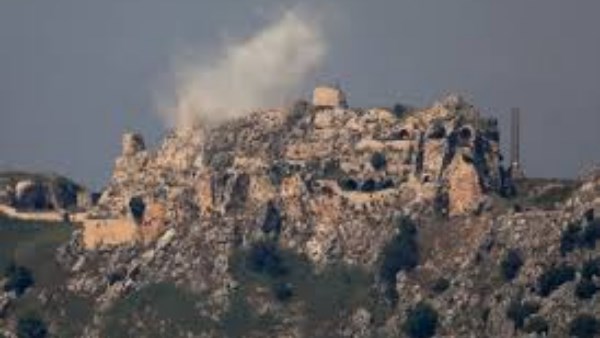
The Israeli military has captured a strategic, Crusader-era castle in southern Lebanon, as Prime Minister Benjamin Netanyahu orders troops to deepen Israel’s incursion into its neighbor’s territory.
The capture of the Beaufort Castle, near the city of Nabatiyeh and roughly 9 miles (14.5 kilometers) from the Israeli border, comes after days of fierce fighting in the area.
“The operation is focused on establishing operational control of the Beaufort Ridge and the Wadi al-Saluki area,” the Israel Defense Forces (IDF) statement said Sunday, adding that it sought to dismantle Hezbollah infrastructure in both areas.
The castle, which was built by the Crusaders on a high cliff overlooking the Litani River some 900 years ago, has long been considered a strategic site in southern Lebanon and has been occupied by Israeli forces during previous conflicts. Israel last held it 26 years ago.
“The operation began several days ago, during which a significant number of IDF ground soldiers commenced offensive operations aimed at expanding the Forward Defense Line,” the IDF said.
“From Beaufort Ridge, Hezbollah terrorists managed military and combat activities and carried out numerous attacks,” it said.
On Saturday, the Lebanese state news agency NNA reported Israeli air raids and “intense bombardment” in the area surrounding the castle. Hezbollah also claimed to have destroyed an Israeli tank near the castle.
Three days ago, the Arnoun Municipality denounced Israeli bombing in the area and urged international organizations to protect the castle, NNA reported.
Netanyahu lauded the operation on Sunday, saying “we returned to Beaufort stronger than ever.”
“Our brave fighters captured the Beaufort outpost. They proudly raised the flag of the State of Israel and the flag of the Golani Brigade there,” Netanyahu said. He added that the capture of Beaufort is a “dramatic stage and a dramatic change in the policy we are leading.”
The Beaufort Castle has been described by UNESCO as “as one of the best-preserved examples of medieval castles in the Near East.” It was also one of 34 Lebanese cultural properties that UNESCO granted provisional enhanced protection—the highest level of immunity against any attack or usage for military purposes—in late 2024, after Israel’s ground invasion of Lebanon.
The castle was the site of intense fighting between the Israeli military and the Palestine Liberation Organization in 1982 when Israel occupied southern Lebanon. It sustained “significant damage” during the 18-year occupation before the Israeli military withdrew in 2000, according to UNESCO.
Despite the US-mediated ceasefire agreed by the Israeli and Lebanese governments in April, clashes between Hezbollah and Israeli forces have intensified.
Israel has in recent days expanded its operation, pushing deeper into Lebanese territory, and Netanyahu said on Friday that Israeli forces have crossed the Litani River, which runs around 15-20 miles (30 kilometers) north of Israel’s border.
Netanyahu said Sunday that “now my directive is to deepen and expand our hold on areas that had been under Hezbollah’s control.”
The IDF said it had “expanded its operations against Hezbollah targets north of the river” and in “additional areas,” in its statement on Sunday. It has issued a series of evacuation orders for villages north of the Litani in recent days.
The intensifying combat between Israel and Hezbollah may put at risk any agreement between the United States and Iran, which is insisting that it include a ceasefire in Lebanon. US President Donald Trump told Netanyahu last week that he supported its “freedom of action against threats on all fronts, including Lebanon,” an Israeli official told CNN.
-920252122624392.jpg "TOREC")