



Iran responded by threatening to strike U.S.-linked infrastructure
Trump vows to bomb Iran's bridges, power plants if it shoots at ships in Hormuz Strait
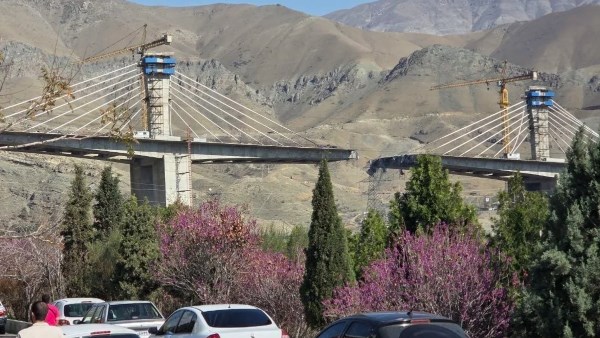




President Donald Trump on Wednesday vowed that the U.S. will blow up an Iranian bridge or power plant — including those in the country's capital city of Tehran — every time Iran shoots at a ship in the Strait of Hormuz.
The threat, delivered via a Truth Social post, ratchets up hostilities between the U.S. and the Islamic Republic that were already inflamed following the collapse of their ceasefire and the recent deaths of three American service members, whose remains Trump was scheduled to receive later Wednesday.
"From this point forward, any time the Islamic Republic of Iran shoots at a ship in the Strait of Hormuz, whether it be by Missile, Rocket, Drone, or any other device or weapon, the United States will bomb and destroy ONE BRIDGE OR POWER PLANT," Trump's post read.
Those targets include "those located next to, or in, the Capital City of Tehran," Trump specified.
Iran responded by threatening to strike U.S.-linked infrastructure and energy facilities across the region if Washington carries out Trump's threat.
"If the Americans target a bridge or a power plant in Iran, Iran will, in turn, strike infrastructure and bridges in the region, including energy facilities where the United States has interests," an unnamed Iranian military source told Tasnim News Agency, an Iranian state-run media outlet, which posted on Telegram.
The source said Iran remained determined to control passage through the Strait of Hormuz, saying ships would be allowed to pass safely only if their transit was coordinated with Tehran and conducted under Iranian arrangements, the source said.
Trump has previously threatened to attack Iran's electrical plants, water facilities and other infrastructure. Experts have warned that such attacks could constitute war crimes under international law.
Earlier Wednesday, Secretary of State Marco Rubio accused Iran of not being "serious" about making a deal with the U.S., while reiterating that Washington was "committed to diplomacy" in the Middle East.
His comments come as U.S. Central Command hit Iranian targets for an 11th straight night as it continues to try to clear the Hormuz Strait, the vital oil-shipping route that has become Tehran's key source of leverage in the war.
Centcom said it had hit military operations centers, drone storage facilities, and military logistics infrastructure.
Speaking at the ASEAN Foreign Ministers' meeting in the Philippines, Rubio said a key sticking point between Teheran and Washington was that Iran "demands the right" to control traffic in the Strait of Hormuz, a right it does not have under international law.
"If we create a precedent in the Middle East, where a nation state can decide that they are going to control an international waterway, charge a toll, and if you don't pay them, blow up your ships, we have created a very dangerous precedent, which will repeat itself in other parts of the world, including in this region," Rubio warned.
-920252122624392.jpg "TOREC")