




The state-run Saudi Press Agency, or SPA, confirmed the Encelia was targeted while transiting the Red Sea
Trump says U.S. will hold Iran responsible for Houthi attacks after oil tankers targeted in Red Sea
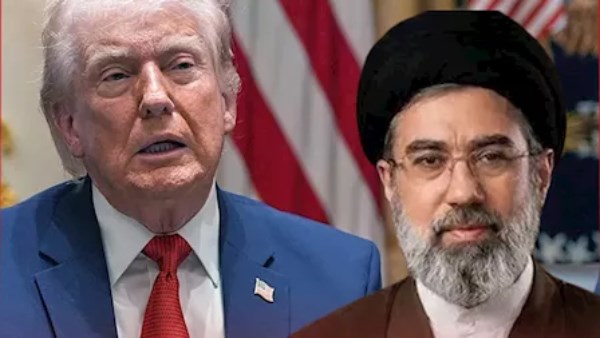




President Donald Trump on Thursday said the U.S. will hold Iran responsible for future Houthis attacks after the Tehran-backed militant group claimed to have struck two Saudi oil tankers in the Red Sea.
The warning comes as Yemen’s Houthis threaten to open up a a new front in the Middle East conflict as the U.S. completed its 12th consecutive night of strikes on Iran.
In a Truth Social post, Trump said the U.S. attacked the Houthis “very powerfully” a year ago for disrupting global trade by shooting ships.
“Since that time, and during our conflict with Iran, they have acted very responsibly. Unfortunately, now they are starting up again, shooting at two Saudi Arabian ships last night,” Trump wrote.
“Please let this TRUTH serve to represent that if they do this again, the U.S. will hold Iran responsible, in that the Houthis are a Surrogate and/or Proxy of Iran, and major military punishment will be inflicted upon Iran and, of course, the Houthis, themselves, who I am very disappointed with in that they have, until now, acted very professionally and smart,” he added.
Yemen’s Houthis said Wednesday that they had targeted two Saudi oil tankers, named Encelia and Layla, with drones and missiles for allegedly violating their maritime blockade. The attack, if confirmed, would mark the first since the militant group announced a naval blockade against Saudi Arabia.
The state-run Saudi Press Agency, or SPA, confirmed the Encelia was targeted while transiting the Red Sea, resulting in a fire at the bow of the vessel. Citing an unnamed official from the Transport General Authority, the agency reported all crew were safe and described the attack as a violation of international law. The SPA did not provide an update on the Layla tanker.
Separately, United Kingdom Maritime Trade Operations, or UKMTO, reported Wednesday that an “unknown projectile” struck a Saudi oil tanker about 130 kilometers (80 miles) from the coastal town of Al Shuqaiq in Saudi Arabia. UKMTO said the incident resulted in a fire onboard and reported no casualties.
U.S. Central Command said overnight that American forces completed another round of attacks against Iran, hitting military targets including maritime capabilities, missile and drone storage facilities, and air defense assets.
“The strikes further degrade Iran’s ability to attack civilian mariners and commercial vessels,” Centcom said in a statement.
It added that U.S. forces have targeted dozens of Iranian military sites on land this month while resuming a blockade against the Islamic Republic at sea. As of Thursday evening, Centcom said it had redirected nine commercial vessels and disabled one to prevent ships from entering or departing Iranian ports.
U.S. Secretary of State Marco Rubio told reporters Thursday that Iran is still not ready to make a deal — “at least not one they are willing to live by.”
“They are going to continue to pay a price and every night the price gets higher and higher and higher,” Rubio said.
Asked for his reaction to Houthi-claimed attacks on two Saudi oil tankers in the Red Sea, Rubio said: “I hope that they will stop. They shouldn’t really do that. They got suckered into this by the Iranians.”
Oil prices were higher Thursday, extending recent gains, as the U.S. and Iran ratcheted up hostilities.
International benchmark Brent crude futures with September delivery were last seen trading up 5.5% at $99 per barrel. U.S. West Texas Intermediate futures with September delivery, meanwhile, stood 5% higher at $91.21.
Trump threatens Iran bridges and power plants
The Institute for the Study of War, a Washington-based think tank, said in its latest update that at least seven vessels had changed course to avoid transiting through the Bab el-Mandeb Strait in light of the Houthis blockade on Saudi ports. The Bab el-Mandeb Strait is a choke point for commercial ship traffic that connects the Red Sea to the Gulf of Aden and global markets.
The U.S. has also increasingly struck Iranian targets outside of southern Iran, including western and northwestern Iran, the ISW said.
Trump had warned the U.S. would destroy an Iranian bridge or power plant each time Iran attacks a ship in the strategically vital Strait of Hormuz, signaling a further fracturing of the interim peace agreement signed by both sides last month.
“From this point forward, any time the Islamic Republic of Iran shoots at a ship in the Strait of Hormuz, whether it be by Missile, Rocket, Drone, or any other device or weapon, the United States will bomb and destroy ONE BRIDGE OR POWER PLANT,” Trump said Wednesday in a Truth Social post.
In response, Iran said it would retaliate against those strikes with attacks against U.S.-linked infrastructure and energy assets in the region.
-920252122624392.jpg "TOREC")