





Trump has previously indicated support for an export ban
Trump ‘very seriously’ considering diesel export ban as global supply crunch worsens



-9202620935848.jpg)
-9202620935849.jpg)

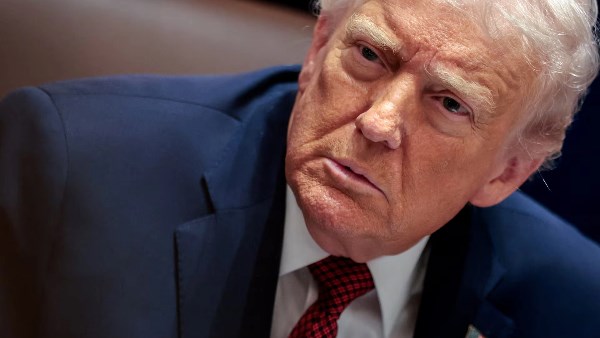
U.S. President Donald Trump has suggested the White House is still considering a diesel export ban as he faces mounting political pressure to tackle soaring fuel prices ahead of the midterm elections in November.
“We’re thinking about it very seriously,” Trump told a Fox News reporter on Sunday, while attending the Presidents Cup golf tournament in Illinois.
“That can oftentimes lead to a little bit of an increase on gasoline for cars, so we’re looking at it very seriously. We may do it,” he added.
Trump has previously indicated support for an export ban as retail diesel prices have climbed to fresh record highs, saying earlier this month that a decision would be made quickly “one way or another” on whether to implement a ban.
U.S. Energy Secretary Chris Wright has said the White House is considering restrictions rather than an outright ban, while Politico reported last week that the Trump administration was preparing a plan to ban diesel exports for 90 days.
The idea of the world’s largest diesel exporter implementing an outright ban has prompted firm pushback from the U.S. energy industry, while analysts have warned that the move could backfire and exacerbate the global fuel crisis.
Diesel prices have soared amid hostilities between the U.S. and Iran, as well as Russia and Ukraine, with the conflicts disrupting vital oil and fuel trade routes. Average U.S. diesel prices hovered around $6.50 a gallon on Friday, according to AAA, up sharply from a year ago but just below their record high of $6.53 on Sept. 22.
Commodity strategists at Morgan Stanley have said an export restriction from the U.S., which has become an important source of marginal diesel supply amid reduced flow from Russia and the Middle East, would likely lower U.S. diesel prices initially — “but with potentially adverse reactions downstream.”
“Not only would diesel prices be higher globally, but there could be a feedback loop to US gasoline prices as refinery runs adjust,” strategists at Morgan Stanley said in a research note published Thursday.
‘The biggest problem for the global oil system’
Benedict George, head of European product pricing at Argus Media, said some form of U.S. restriction on diesel exports would likely send European diesel prices and premiums against crude “to a new unprecedented level,” noting that the U.S. has supplied about half of Europe’s diesel imports over the last couple of months.
“It’s really important to be clear that there is no measure yet and it’s very unclear whether there will be a measure at all and what the measure will be even if there is a vision,” George told CNBC by telephone.
When talking to oil traders in Europe, it’s clear that they mostly doubt the U.S. is going to restrict diesel exports, given how challenging a move would be for U.S. oil companies, George said.
In the U.S., soaring diesel prices have put additional financial strain on farmers and agricultural workers as well as drivers and households ahead of the November midterm elections.
The American Petroleum Institute, an oil lobby group, was among those to have quickly contested the prospect of a U.S. diesel export ban when Trump initially appeared to back the idea last week.
In a statement, API CEO Mike Sommers said that “restricting U.S. energy exports would only compound the problem—exacerbating refining challenges and ultimately hurting consumers.”
He added, “The answer is more supply and more flexibility—not new restrictions that risk making a difficult situation worse.”
Trump has previously urged Ukrainian President Volodymyr Zelenskyy to stop targeting Russian oil refineries, saying the attacks are “hurting the world” as fuel supply disruptions continue to prop up U.S. diesel prices.
Ukraine, which fears an extremely difficult winter period amid expectations of another Russian assault on its energy infrastructure, has previously characterized Russian oil refineries as legitimate military targets.
Argus’ George said Ukrainian attacks on Russian oil refineries have added a whole new layer to the global supply crunch, making diesel “the biggest problem for the global oil system, whereas before it was one of several very big problems.”
-920252122624392.jpg "TOREC")